


Hot Pot For One
Role: Concept, Narrative, Level designer, Gameplay Programmer (Unity)
Team: 2 total (1 programmer, 1 artist)
Time: 10 months
Tech: Unity, C#, Blender, Photoshop
Platform: PC
Website: Hot Pot for One
Steam Page: Hot Pot For One on Steam (steampowered.com)
Description
You are alone on a cold, Christmas night, stuck at home, in a foreign country. You get through it by cooking a hot dish intended for six people. Hot Pot For One is a game about the bitterness of lonely times, and the sweet comfort of food that keeps us going. It is inspired by our personal experience as international students living far away from your friends and family.
My contributions
-
Co-designed the game’s concept, narrative structure, emotional pacing, interactions, and overall player experience as part of a two-person core team.
-
Implemented the project in Unity as the C# programmer, building the cooking interactions, physics-driven object handling, food-state feedback, memory system, and supporting game logic.
-
Prototyped and evaluated multiple gameplay directions before simplifying the design around the most emotionally resonant actions: preparing, cooking, eating, and discarding food.
-
Continued to lead design and development after the original thesis build, polishing the experience and coordinating with new collaborators on illustration, music, and additional content.
Designing Stillness and Bittersweetness
in Hot Pot For One

Finding the Core Interaction Through Rapid Prototyping
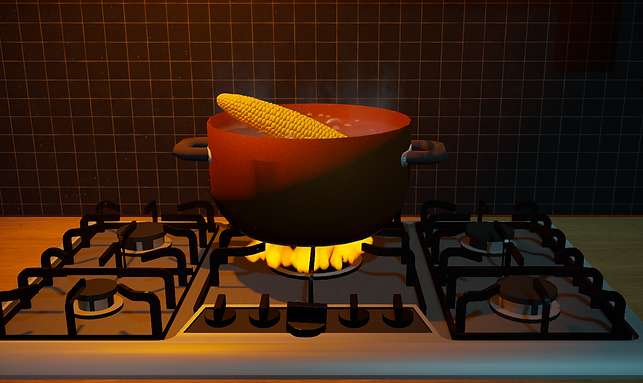
The project began with a simple image: a pot of boiling water sitting on a kitchen stove late at night. I recreated the scene in Unity and found myself watching the steam rise, the bubbles grow and burst, and the water move in slow cycles. That quiet moment became the emotional foundation of the game.
We initially explored several more conventional gameplay structures, including cooking puzzles, resource management, food preparation, and movement between different kitchen stations. Although these systems created more activity, they pulled attention away from the stillness and reflection that had made the original prototype compelling. Through prototyping and playtesting, we simplified the experience around one central interaction: placing ingredients into the pot and waiting for them to cook.
Removing those additional systems did not make the game less interactive. It allowed small actions—the weight of dropping in an ingredient, the gradual change in its appearance, and the decision to eat or discard it—to carry more emotional meaning.
The goal was not to simulate every step of cooking. It was to preserve the feeling of quietly preparing food for yourself when no one else is there.

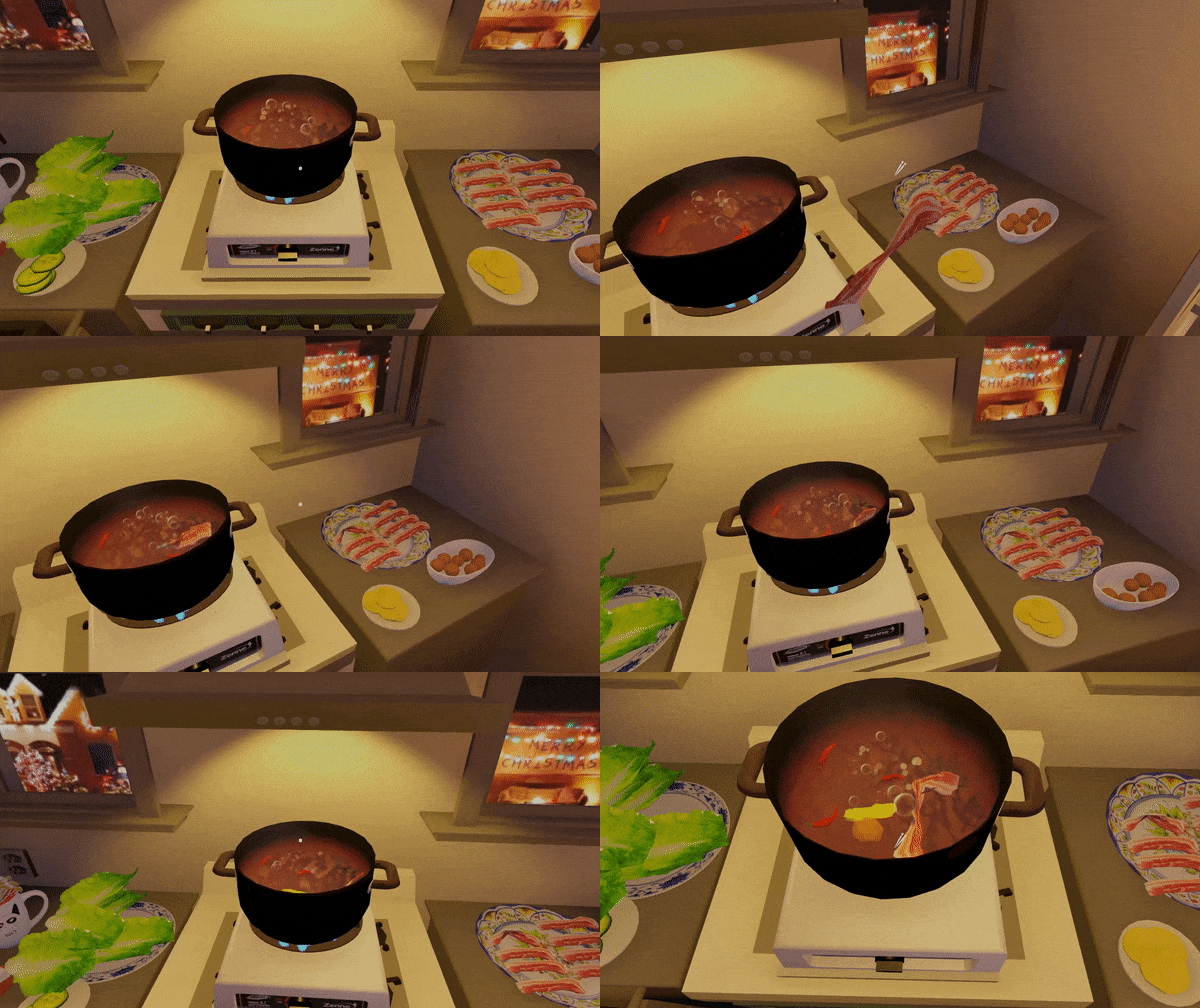
Because placing food into the pot is the game’s most repeated interaction, I spent significant time refining its movement, feedback, and sense of physicality. Ingredients subtly shrink and change color as they cook, communicating that they have softened and absorbed the broth without relying on UI.
For pickup, each ingredient is connected to the held position through a physics joint rather than being rigidly attached to the player’s hand. The slight delay and secondary movement give the food a more natural sense of weight.
I also created a custom invisible mesh that aligns the food’s drop position with the player’s perception and intent. From the camera’s perspective, an ingredient may appear to be directly above the pot even when its actual position or depth would cause it to miss. Raycasting against the mesh allows the ingredient to land where the player expects it to, making the interaction feel intuitive without exposing the correction.
Making Cooking Feel Tactile and Intuitive
Focusing the Experience on the Act of Eating
During playtests, we noticed that players often treated movement and navigation as goals in themselves, constantly searching the environment for the next task. But Hot Pot For One was not meant to be about navigating a kitchen. Its emotional center was the act of preparing and eating a meal alone.
We simplified the level so that every essential object was within the player’s reach. Removing character movement reduced unnecessary friction and allowed players to focus on handling ingredients, watching them cook, eating, and observing the quiet changes around them.
This did not eliminate exploration. Players could still examine the room, discover environmental storytelling, and interact with nearby objects through simple controls. By separating exploration from spatial navigation, we preserved curiosity while keeping the experience intimate and centered on the meal.
The goal was not simply to slow the player down, but to remove actions that distracted from the experience we wanted them to notice.


Design decisions
-
Kept the playable environment small and visually dense.
-
Placed every important interaction within reach.
-
Removed unnecessary navigation between kitchen stations.
-
Used cooking time as intentional pacing rather than downtime.
-
Embedded story details throughout the room so observation remained rewarding.
Designing a Bittersweet Emotional Arc
“Bittersweetness” was one of the project’s central emotional goals, but it was too abstract to function as a design instruction by itself. We needed to translate it into a sequence of player experiences.
We created an emotional curve that alternated between moments of comfort and reminders of isolation.
Comforting moments included:
-
ingredients gradually filling the table
-
the warmth and sound of the boiling pot
-
memories summoned by the familiar flavors
These moments were interrupted by less comfortable details:
-
environmental reminders that the player was far from home
-
an intrusive street siren disrupting the music
-
the final act of throwing the leftovers away
Rather than presenting loneliness only through dialogue, we allowed it to emerge through the contrast between the warmth of the ritual and the absence surrounding it. Preparing the meal creates comfort, but the same actions also make the player increasingly aware that no one else is coming.
The emotional experience comes from the coexistence of comfort and loneliness, not from treating them as separate scenes.

Turning Eating Into Narrative Discovery

Originally, eating a piece of food only produced simple audio feedback. While the interaction felt satisfying, it did not help communicate the protagonist’s history or deepen the emotional meaning of the meal. We needed a way to introduce narrative without interrupting the game’s quiet pacing with dialogue or cutscenes.
I added a system in which eating different foods reveals illustrated memories from the protagonist’s life. This connected the story directly to the game’s central interaction: food was no longer just something the player prepared and consumed, but a trigger for remembering home, family, and past experiences.
Because players decide what to cook and when to eat it, they also control the pacing of the narrative. The illustrations reward experimentation with different ingredients and encourage players to uncover the story through exploration rather than receiving it in a fixed sequence.
By tying memories to eating, the narrative unfolds through the same actions that create the game’s emotional experience.